Op-Ed
Is the U.S fighting the Cartels, or Mexico’s political Transformation?
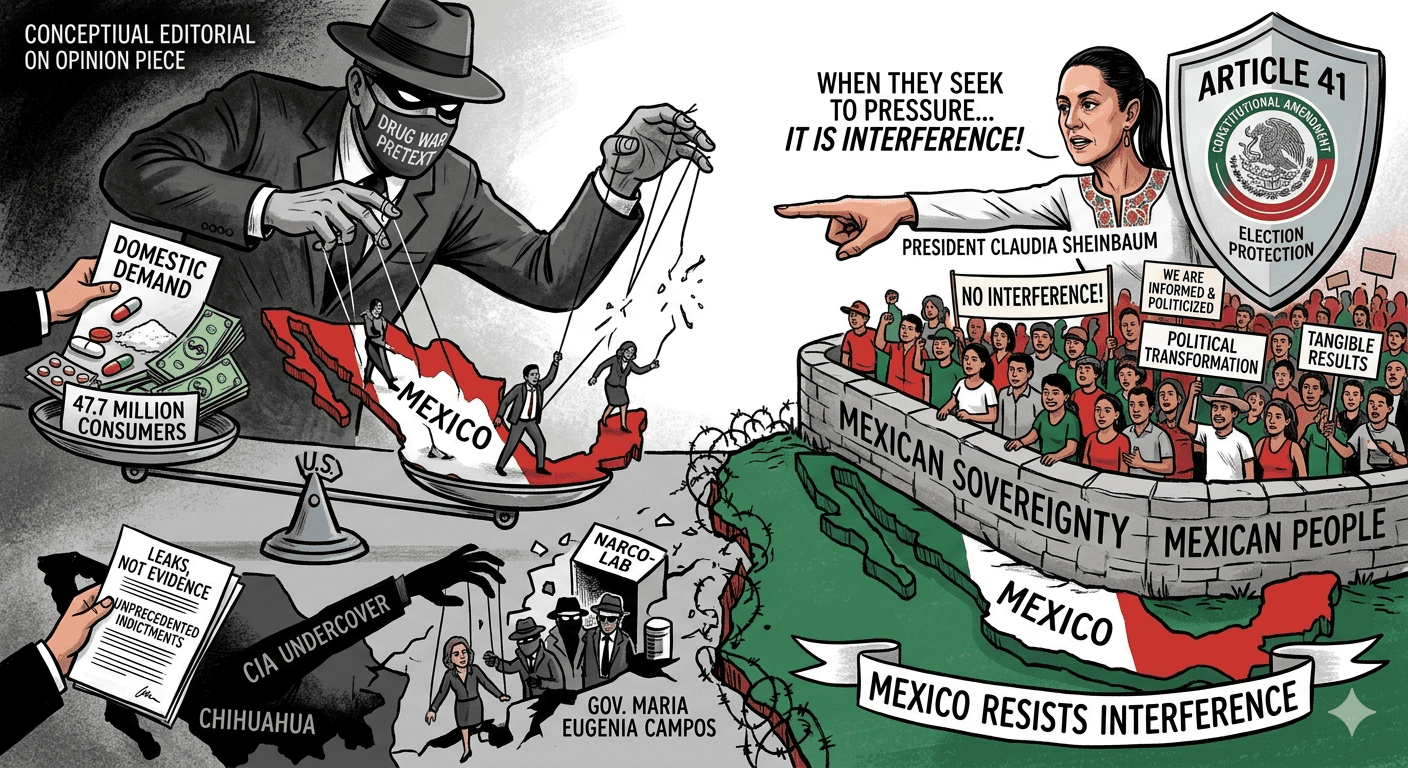
How unconfirmed leaks and unprecedented judicial overreach aim to weaken Mexico's independent political transformation.
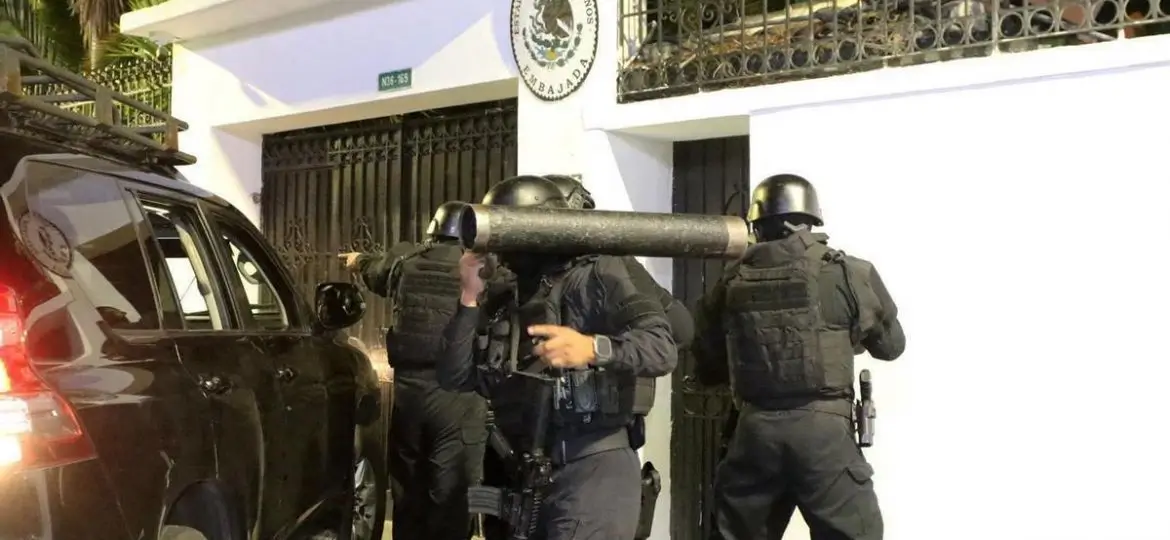
Mexico has been under intense pressure by the U.S. since Trump’s first term, but in recent weeks the pressure has escalated via two highly serious flashpoints. First, the infiltration of alleged CIA agents in an undercover operation to supposedly dismantle a narco-lab in the Mexican northern state of Chihuahua. Second was the unprecedented indictment issued by the U.S. Attorney’s Office for the Southern District of New York against the Governor of Sinaloa and 9 other officials, including a mayor and a federal senator for alleged links to organized crime. To indict an acting governor and active public servants is entirely unprecedented in the long-standing history of bilateral relations. President Claudia Sheinbaum rightfully noted that it is entirely legitimate to question— and even doubt— the true intentions behind these actions. Is well known that the U.S. historically has used the combatting of drug trafficking as a pretext to intervene in Latin America.
If the Trump administration’s true intentions are to eradicate drug trafficking, then Mexico is not the root of the problem. All indicators show that Mexico is making a massive effort in this fight and has borne an immense burden. The U.S. constantly demands that Mexico do more, but what about the U.S itself? What significant actions has Washington undertaken to prevent these illegal substances from reaching its own population? What serious policy has the U.S implemented to tackle domestic demands, considering it remains the world’s largest consumer market of illegal drugs. According to SAMHSA 2023 Survey on Drug Use and Health (INSDUH), approximately 47.7 million US citizens aged 12 and older are currently consuming illegal drugs, meaning that they have used illicit substances in the past 30 days. This represents roughly 16.8% of the population within the age bracket. To sustain this domestic crisis, Americans spent a staggering 150 billion dollars annually on illegal drugs.
We shouldn’t lose sight of the timing behind this unprecedented pressure against Mexico. The unsealing of the Ruben Rocha Moya indictment comes weeks after the surprising discovery of CIA agents operating in Chihuahua, exposing the collusion of the government of right-wing Governor Maria Eugenia Campos. Furthermore, we must keep in mind that while the U.S. Attorney’s Office for the Southern District of New York urgently requested these arrests for extradition purposes, they did so without presenting any substantial evidence that supports that request. Consequently, Mexico’s Attorney General’s Office is still waiting for the necessary documentation backing their claims.
We also have to wonder why the U.S Department of Justice appears to be exclusively targeting governors of the ruling MORENA party. Just recently the Los Angeles Times reported unconfirmed allegations that the DOJ is investigating two additional MORENA governors: Alfonso Durazo, governor of Sonora and Américo Villarreal, governor of Tamaulipas. By relying on apparent leaks regarding alleged visa cancellations and links to organized crime rather than public and verifiable evidence, these actions seem to deviate from standard judicial procedures. Instead, they appear to be coordinated effort to exert political pressure with the aim of weakening Mexico’s leadership or even destabilizing the government. Both governors have declared that their visas have not been canceled and maintain that they received no information indicating that they are under investigation by the U.S authorities.
President Sheinbaum has stated that if there is no evidence, then this must be political. Furthermore, one part of her speech—given at the rally marking the second anniversary of her historic election victory—that resonated most was when she pointed out that “when someone from abroad dictates who is guilty and who is not; when they seek to pressure our institutions from abroad; when the idea that ‘another country can intervene in matters that belong solely to the Mexicans’ is normalized—we are no longer talking about cooperation, we are talking about interference.”
Given the sequence of events and the undeniable results of Mexico’s fight against organized crime, it’s clear that the pressure that the Trump administration is exerting on the country is not about the war on drugs, but rather, it’s political. Since December 2018, Mexico has undertaken a political transformation from a sovereign and independent position that does not necessarily align with U.S. interests. We must also take into account that Trump’s foreign policy for Latin America under his so-called ‘Donroe Doctrine’, which basically seeks to align the entire region with U.S. interests. This explains why his administration has put so much effort into meddling in regional presidential elections in favor of right-wing and far-right candidates.
While President Donald Trump has successfully influenced election outcomes across Latin America, replicating the success in Mexico will be difficult for two primary reasons. First, the political transformation of the last seven years, has produced a highly politicized and well-informed electorate, reflecting public opinion resilient to external manipulation and diminishing the influence of mainstream media. Second, the administrations of both the former President Andrés Manuel López Obrador and Claudia Sheinbaum have delivered tangible structural reforms that have visibly improved the lives of citizens.
Nevertheless, President Claudia Sheinbaum has enacted strict measures to safeguard national sovereignty against external meddling. A recent amendment to Article 41 of the Constitution now provides explicit legal grounds to annul elections compromised by foreign interference. Although this framework will not come into full effect until the 2030 federal election cycle, that is why the Mexican public must remain vigilant.
Photo:Gemini AI
Gabriel Infante Carrillo