Mexico
Mexico and South Korea Adopt Joint Action Plan to Deepen Strategic Ties
Published:
Mexico
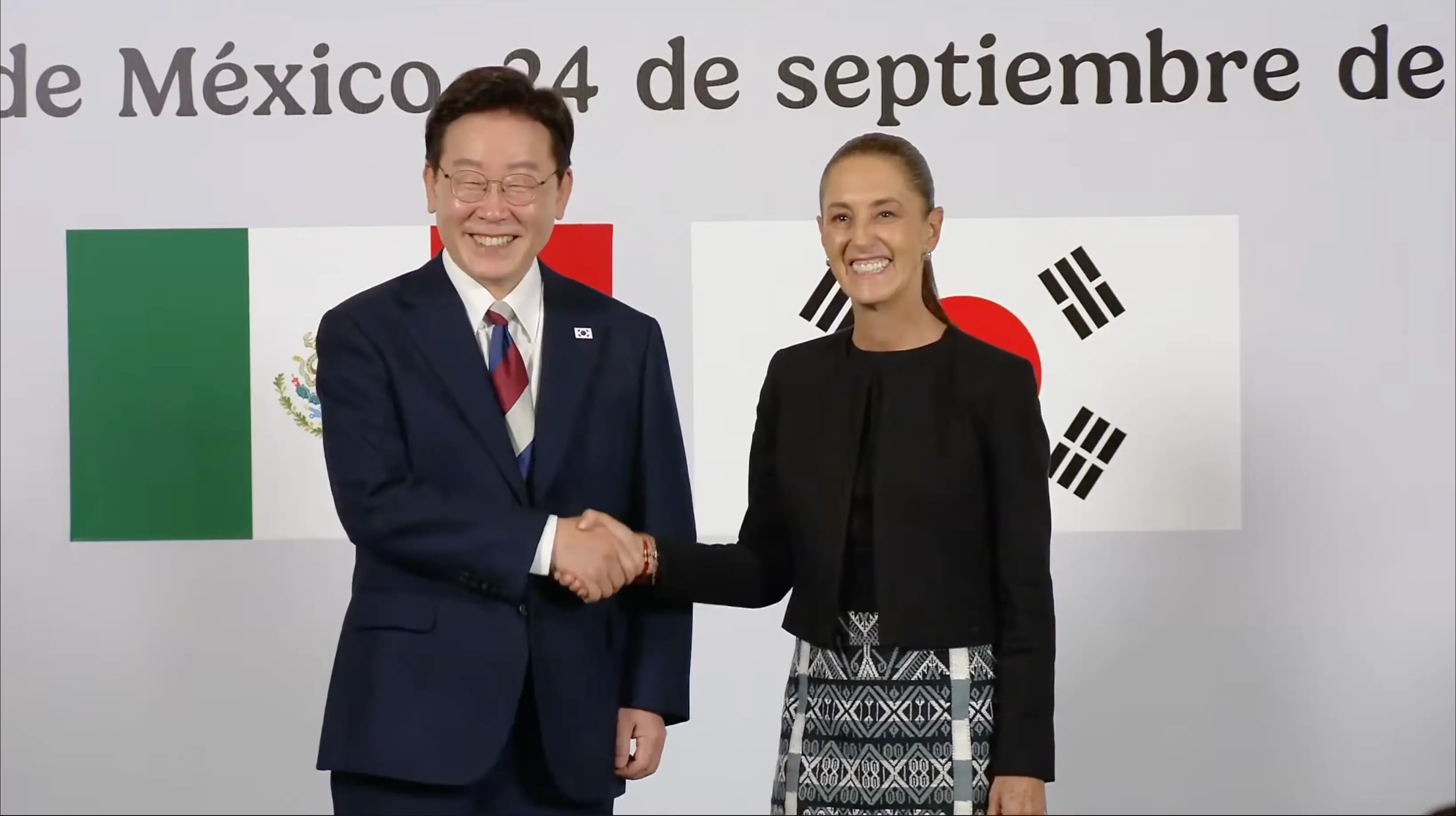
During the state visit of the President of the Republic of Korea, Lee Jae-myung, to Mexico, President Claudia Sheinbaum and the South Korean leader signed the Mexico-Korea Joint Action Plan (2026–2030), establishing a new roadmap for the bilateral relationship during this period. This includes the signing of 17 memoranda of understanding covering areas such as economic and financial cooperation, defense and security, anti-corruption efforts, academic mobility, culture, sports, tourism, science and technology, intellectual property, and agriculture, among others.
In a joint statement at the National Palace, the South Korean president highlighted Mexico's importance at a time of uncertainty in the international order, a period "characterized by the restructuring of supply chains."
"Mexico—one of the world's top ten economies and a key hub in global supply chains—is a fundamental strategic partner for the Republic of Korea," President Lee noted.
He also pointed out that the Joint Action Plan envisions both countries expanding bilateral cooperation in advanced industries, including AI, digital technology, aerospace, and defense.
"This will help foster ties between the strategic industries prioritized by my administration and the development of new industries outlined in Mexico's economic development strategy, the 'Plan México,'" he added.
In this regard, President Sheinbaum noted that one of the agreements would facilitate the participation of Mexican small and medium-sized enterprises (SMEs) in the supply chains of Korean companies established in the country.
According to President Lee, regarding economic and trade matters, the plan aims to strengthen institutional foundations as well as financial and supply-chain linkages, while also exploring new cooperation opportunities to further boost bilateral trade and investment.
Additionally, both leaders agreed to work together to ensure that the amendment to the Reciprocal Promotion and Protection Agreement—a process that has been underway for seven years—enters into force as soon as possible.
President Claudia Sheinbaum noted that the two countries share a strategic relationship grounded in common values and interests. She also highlighted that their discussions covered international agenda topics, with both sides agreeing on the importance of upholding multilateralism, international law, the peaceful resolution of disputes, and state sovereignty.
In this regard, President Lee commended President Sheinbaum for reaffirming her firm support for Seoul’s policy of peaceful coexistence on the Korean Peninsula, describing Mexico as a "friend of proven loyalty and shared values."
President Lee Jae-myung thanked President Sheinbaum for the cooperation regarding oil imports, which provided additional crude supplies for Korean companies.
The South Korean leader noted that trade between Mexico and Korea reached $27 billion in 2025, making Korea Mexico's leading global partner and Mexico Korea's primary partner in Latin America.
Images: Gobierno de México
Voice of Mexico