Mexico
Mexico-EU Seal a Landmark Renewed Global Agreement and Trade Deal
Published:
Mexico
In the midst of a turbulent world, marked by economic and trade uncertainty following the tariff war imposed by the US government, this agreement could not come at a better time, for both Mexico and the European bloc.
Mexico, the second-largest economy of Latin America, is the EU’s main trading partner in the region. According to Roberto Velasco, Mexico’s Secretary of Foreign Affairs, bilateral trade has quadrupled since the first Global Agreement came into force in 2000, reaching 88 billion USD in 2025. Furthermore, European investment totaled 64 billion USD from 2018 to 2025, wrote in the ‘Excelsior’ newspaper.
This new agreement seeks to boost investment, innovation, resilient supply chains, economic security, straighten a just international trade based in rules.
According to Mexico’s Secretary of Economy, Marcelo Ebrard, the benefits of these agreements for the country, is that Mexican companies —large, medium and small—will have access to a market of 450 million people virtually tariff-free. The Mexican agricultural sector and agribusiness are the “big winners.” Mexican products such as avocados from Michoacán, berries from Jalisco or Tequila will have access to the European market tariffs-free. Furthermore, iconic national products such as Chiapas Coffee, the Habanero chilis from Yucatán, Ataulfo mangos from Soconusco, Cajeta (a traditional Mexican candy based on goat’s milk) from Celaya, and the vanilla from Papantla will have legal protection of origin throughout the EU to avoid imitations.
In the manufacturing sector, Ebrard points out a major window of opportunity linked to the automotive and auto parts industry, will be able to export tariff-free to all 27 EU member states. He emphasizes that with the Interim Trade Deal will help to boost European investment to strengthen Plan Mexico, the country’s reindustrialization strategy, and noted that the EU is already the country’s second largest source of investment with 13,500 European companies established in Mexico. The country’s goal, he pointed out is to increase Mexican exports to the EU by 50% by 2030, which currently stands at 24 billion USD, wrote in ‘El Financiero’ newspaper.
Meanwhile, Ursula von der Leyen announced during the press conference at the National Palace —following the signing of the Global Agreement and the Interim Trade Deal alongside President Claudia Sheinbaum—an investment fund of 5 billion euros (approximately 100 billion Mexican pesos), through the European Global Getaway strategy with the aim to trigger projects aligned with ‘Plan Mexico’, such as clean energy, electromobility, circular economy, pharmaceuticals and digital networks.
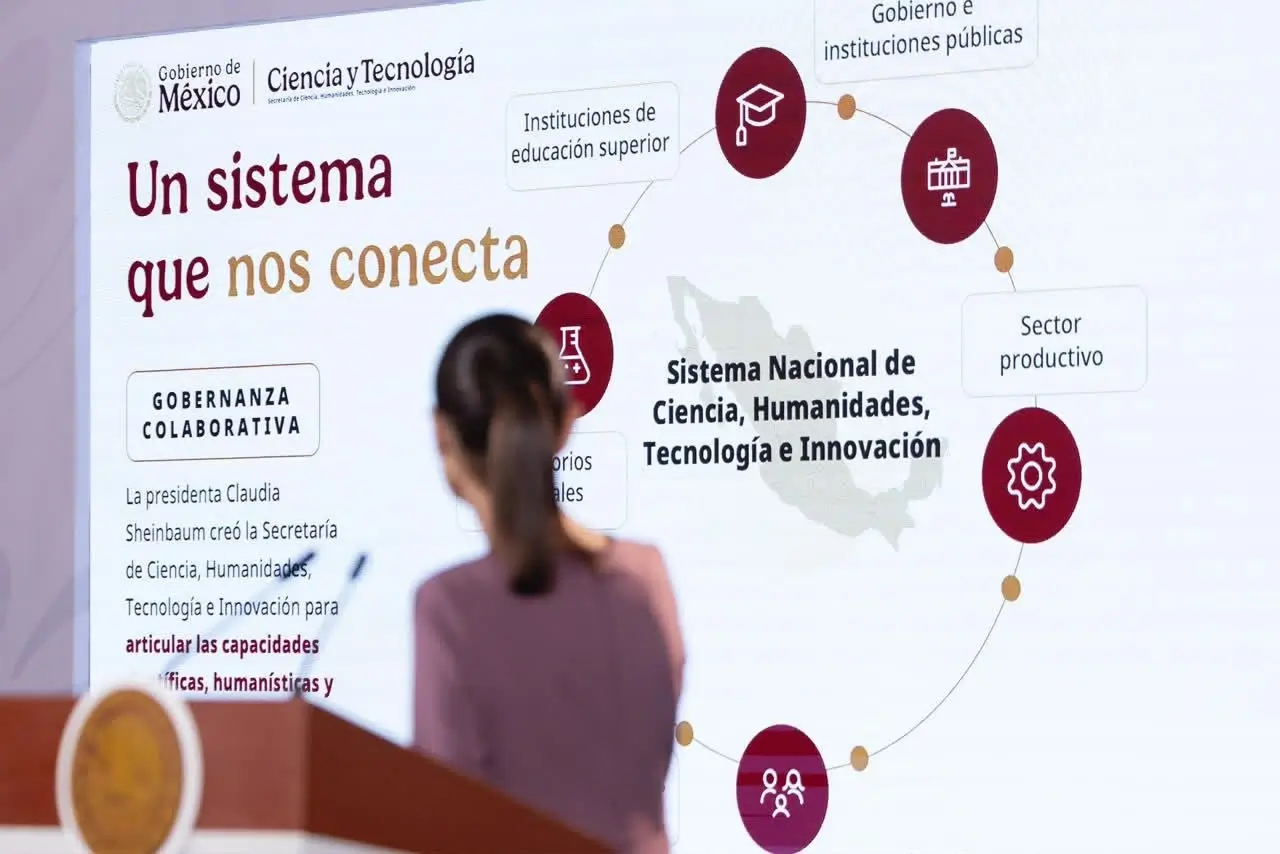
President Claudia Sheinbaum assured at the joint press conference that the trade issue was addressed with the aim to ensure that the agreement is complementary to both economies, rather than replacing local industries. She emphasized that the new vision is not about exploiting raw materials in Mexico and processing them elsewhere, but rather about increasing added value in the country, which aligns with Plan Mexico. She concluded by saying that EU’s investments “have to do with production in Mexico and at the same time with facilitating investment by Mexican companies in Europe that have a strong presence in the EU.”
The renewed Global Agreement isn’t limited to a trade deal, but also includes a political and geopolitical component. It will intensify high-level talks and strengthen cooperation on a common global agenda such as democracy, human rights, peace and security, sustainable development, environment, education, culture, science and technology.
Voice of Mexico