Op-Ed
Sovereignty Over Submission: The Real Root of Trump’s Friction with Mexico
Published:
Op-Ed
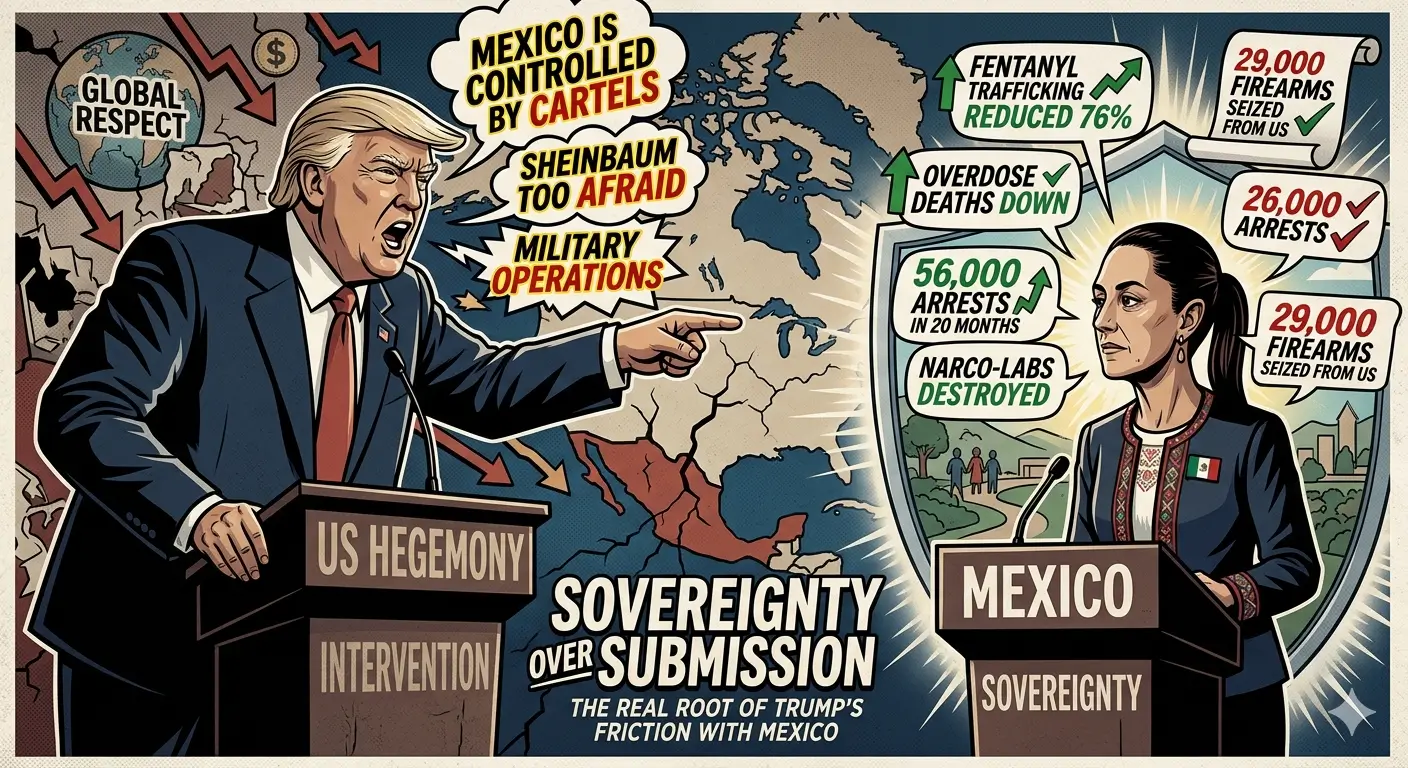
Once again, during a press conference at G7, President Trump revived his narrative that Mexico is controlled by the cartels and that President Sheinbaum is “too afraid” to fight the drug cartels and threatened to go in and target the cartels on Mexican soil.
Trump insists that Mexico isn’t doing enough to stop drugs from entering the U.S., but his narrative contradicts his own data. During his press conference, he said that drug trafficking by sea fell 97%. Yet, he continues to claim that drugs come through Mexico by land, even though data from both the U.S. and Mexico have recorded a historic drop in cross-border drug trafficking—notably a 76% reduction in fentanyl. This decline has led to a significant decrease in overdose deaths among U.S. citizens. This could not have been achieved if Mexico were truly run by the cartels, or if the Mexican President Claudia Sheinbaum were too afraid to fight them, as Trump has continually claimed.
Mexico’s commitment to combating drug trafficking is evident in its massive seizures of narcotics and destruction of thousands of narco-labs and the detention of high-profile cartel leaders across all criminal groups—many of whom have already been extradited to the U.S. In just 20 months into President Claudia Sheinbaum’s administration, Mexico has detained 56,000 organized crime members, including 57 leaders of criminal organizations. By comparison, the administration of former President Andrés Manuel López Obrador detained 95,000 organized crime members, including 39 high-profile leaders, which debunks the narrative that there was and is collusion between the previous and the current administrations with the cartels. This massive volume of arrests also disprove the Trump administration’s claim that there was a lack of cooperation under former President López Obrador, despite what Secretary of Homeland Security Markwayne Mullin recently asserted before a congressional committee.
Following this recent statement made by Trump and Vice-President JD Vance that they would like to continue collaborating with Mexico, but that they reserve the right to conduct military operations there, President Sheinbaum once again responded by ruling out any authorization for U.S. military operations on Mexican soil. She noted that the U.S. should conduct operations on U.S. territory and combat arms trafficking. Under the current administration alone, Mexico has seized 29,000 firearms, which is a telling sign that the Trump administration isn’t doing enough to stop the flow of illicit firearms.
It is clear that the Trump administration has no solid argument to justify—under their logic—a military operation on Mexican soil to fight the cartels. When JD Vance says that they would like to “continue collaborating” with Mexico but “reserve the right to conduct military operations” in the country, it clearly sends a message. The current collaboration, which has yielded notable results acknowledged by officials within the administration, is clearly not the kind of partnership Trump wants to have. Instead, he seems to favor the model established with certain submissive Latin American governments—such as the Ecuadorian, Salvadoran, and Argentine administrations under the so-called “Shields of the Americas” initiative—where collaboration translates to renouncing national sovereignty. This is precisely what Mexico strongly rejects, which frustrates Trump all the more following his clear defeat against Iran. This is why he lashed out to defame Mexico and President Sheinbaum the same day he signed the peace memorandum with Iran.
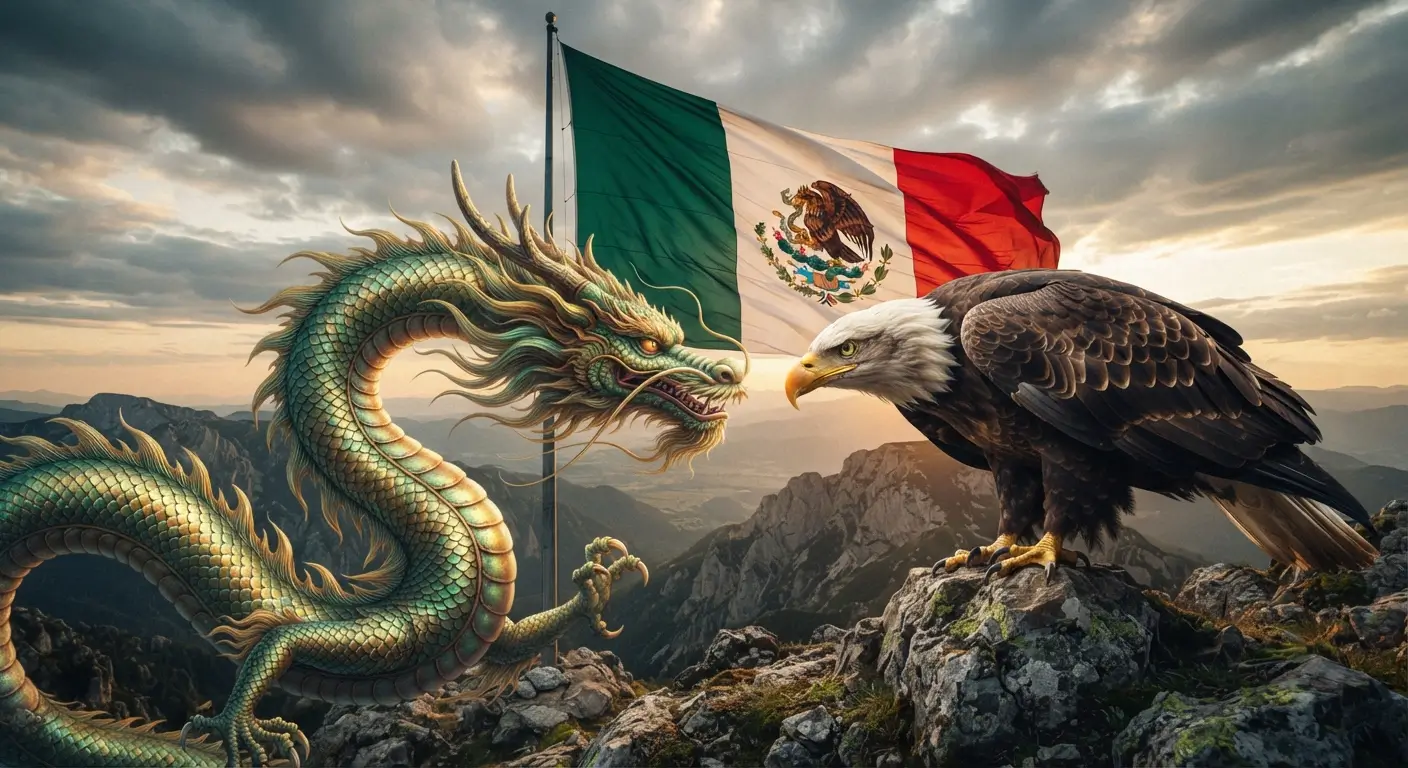
Trump really isn’t committed to ending drug trafficking, because if he were, he would have taken strong actions within the U.S. to stop the flow of illicit drugs from reaching the streets of American cities and gone after the domestic cartels. He would have already launched the anti-drug campaign to tackle consumption that he announced before taking office, following his first conversation with President Sheinbaum. Furthermore, he would have taken decisive action to crack down on the arms trafficking that supplies and arms the Mexican cartels. Instead, he is using the drug war as a pretext to intervene in Latin America to recover U.S. hegemony in the region and across the entire Western Hemisphere. Faced with what he sees as a growing presence of China and Russia, his strategy plays out as a more aggressive application of the Monroe Doctrine.
Trump's narcissism doesn't allow him to see that his policies are not making "America Great Again." He has failed to improve the livelihoods of his fellow citizens, and dissatisfaction among the population is growing. Trump’s approval ratings are in free fall, roughly sitting at 36% to 38%, with disapproval between 59% and 63%, according to recent Reuters/Ipsos polling. Furthermore, he is not making the U.S. a more respected nation; on the contrary, an anti-American sentiment is growing worldwide at a time when he is causing global chaos on economic, trade, and world peace matters.
Photo: AI Gemini
Gabriel Infante Carrillo