Op-Ed
Demythologizing Mexico: Mexico’s Universal Healthcare Plan
Published:
Op-Ed
When president Claudia Sheinbaum announced earlier this year her administration was looking to universalize Mexico’s healthcare system, many in the US reacted to the news with surprise. The most recurring reaction was the fact that Mexico did it before the US did, the second was how was Mexico able to do it if the economy of the country is smaller than the US. Both reactions were interesting but were made without full knowledge about Mexico and its healthcare system. In the previous installment public healthcare was briefly mentioned and in this one we will see it in more detail to explain how universalized healthcare in Mexico will be achieved. It is neither revolutionary nor complicated but context is required to fully comprehend what is being done.
One of the most commonly used points against free universal public healthcare is that it isn’t really free and usually followed by the line “Why should my taxes pay for other people’s healthcare. While it is technically true that public healthcare does have a cost that is just for financing the system and because it is a government program the money does come from taxes, which is what taxes are for, or other forms of public financing the free part actually comes when the service is required. In other words the taxes you pay are returned in the form of a service you might use in the future and its free because it wouldn’t make sense to pay again for something you already paid for.
We can look at this in an other way by comparing it to private health insurance. When someone buys an insurance plan they have to pay an amount of money called a “Premium” and that payment goes to a pool of money that contains the payments of every insured person. That money, in theory, should be enough to cover every insured person, something that companies have forgotten is their main responsibility. Unlike public healthcare these companies put certain limits to the certain illnesses, medication or treatments and costumers have to share the responsibility with the company via a co-pay, but there are deductibles. Public healthcare doesn’t have these restrictions and it makes it easier for people to access medical care no matter their illness or social status. Public healthcare guarantees healthcare as a fundamental human right and not as a privilege where people who have the most money can get access to it.
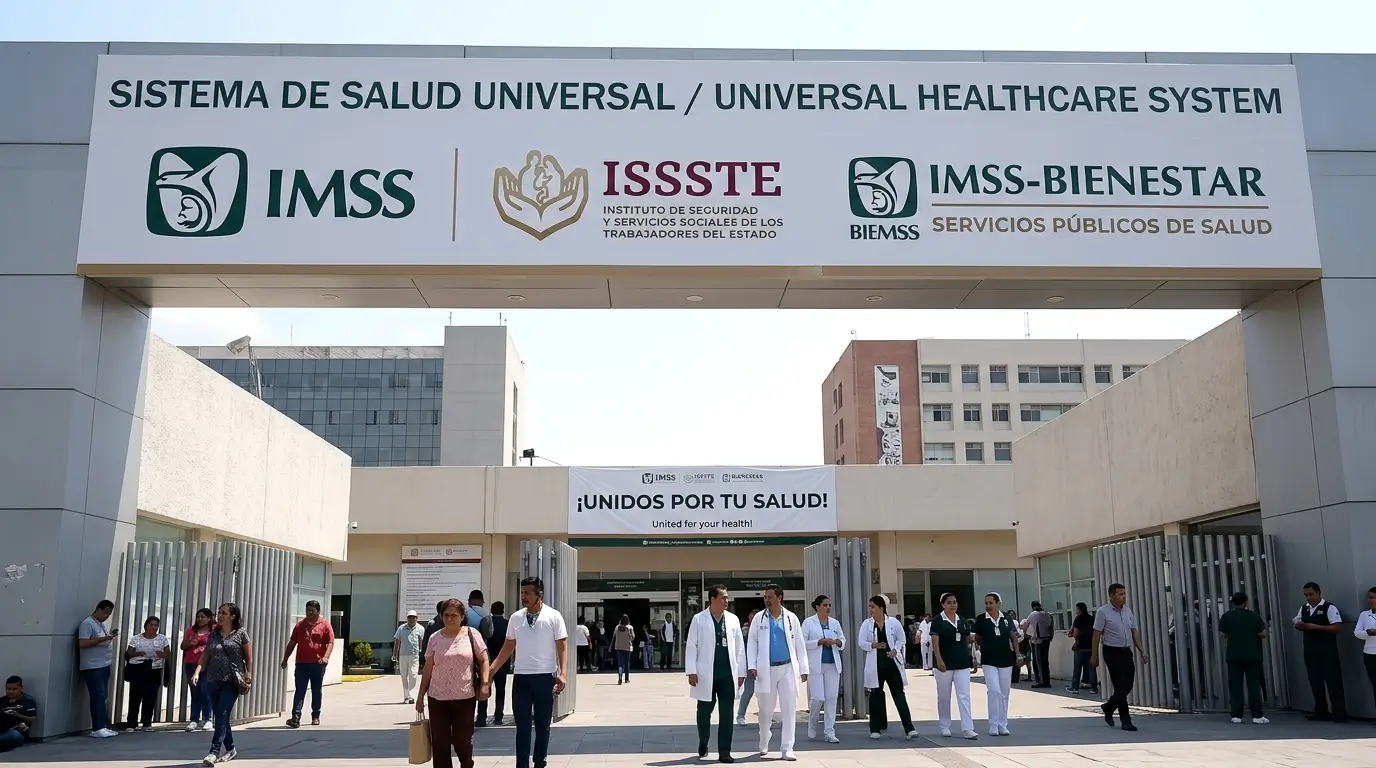
Mexico has had public healthcare for decades, but unlike what people might think of as a public healthcare system, Mexico’s is different. How different, well Mexico actually has three systems that cover different segments of the population, these are the Mexican Social Security Institute (IMSS for its initials in Spanish), the Institute for Social Security and Services for State Workers (ISSSTE for its initials in Spanish) and IMSS-Bienestar. The IMSS is the oldest and was created on January 19, 1943 and began functioning in 1944 and is linked to formal employment and is obligatory that employers affiliate their employees. The second system is ISSSTE and this is for government employees and teachers and was created on December 30, 1959 and began functioning in 1960. Finally we have IMSS-Bienestar which is the newest one and was created on September 1, 2022 toreplace an earlier system also created by President Andrés Manuel Obrador and covers the people who don’t have social security.
The IMSS is funded in a tripartite form, that is employees, employers and the government all contribute a portion of the money. The ISSSTE is also financed by the employees and the government. Employee contributions usually come via their payroll through a discounted amount of their gross salary. As for the IMSS-Bienestar it is a decentralized public body and has its own budget. It federalized State healthcare systems and so for the IMSS-Bienestar to have presence around the country there has to be an agreement between the States and the Federal Government which transfers the hospitals and clinics run by said States. At this time 24 States have IMSS-Bienestar. Unlike the IMSS and ISSSTE to have access to IMSS-Bienestar people have to register an will recieve an affiliation card.
As we can see even though Mexico has public healthcare it is a fragmented one and beneficiaries are obligated to use only the hospitals and clinics of the system they are affiliated to. This was seen by the government as a problem as it limited the access to healthcare. If an emergency arises trying to find the closest hospital or clinic of the system you are affiliated to might not be easy and if the closest one is from a different one you do have the option to use it but afterwards there would be a cost and treatment, once the emergency was over, would have to continue with the proper healthcare institution.
When Andrés Manuel López Obrador won the presidential election in 2018 one of his main priorities was to revitalize the public healthcare system as it had been neglected for years by the neoliberal governments. During this period there had been very little investments made to the IMSS and ISSTE, while they still worked this lack of support deteriorated them. The equipment was outdated, the quality of service declined due to saturation caused by the fact that there was less medical personnel working in the social service sector. What little the government did was mostly smoke and mirrors and basically an other corrupt pipeline to fill the pockets of politicians. Like I mentioned before in 2018 everything changed and while for over 30 years of a market based economy saw healthcare as a product to sell the new regime saw it as a right and recovered it.
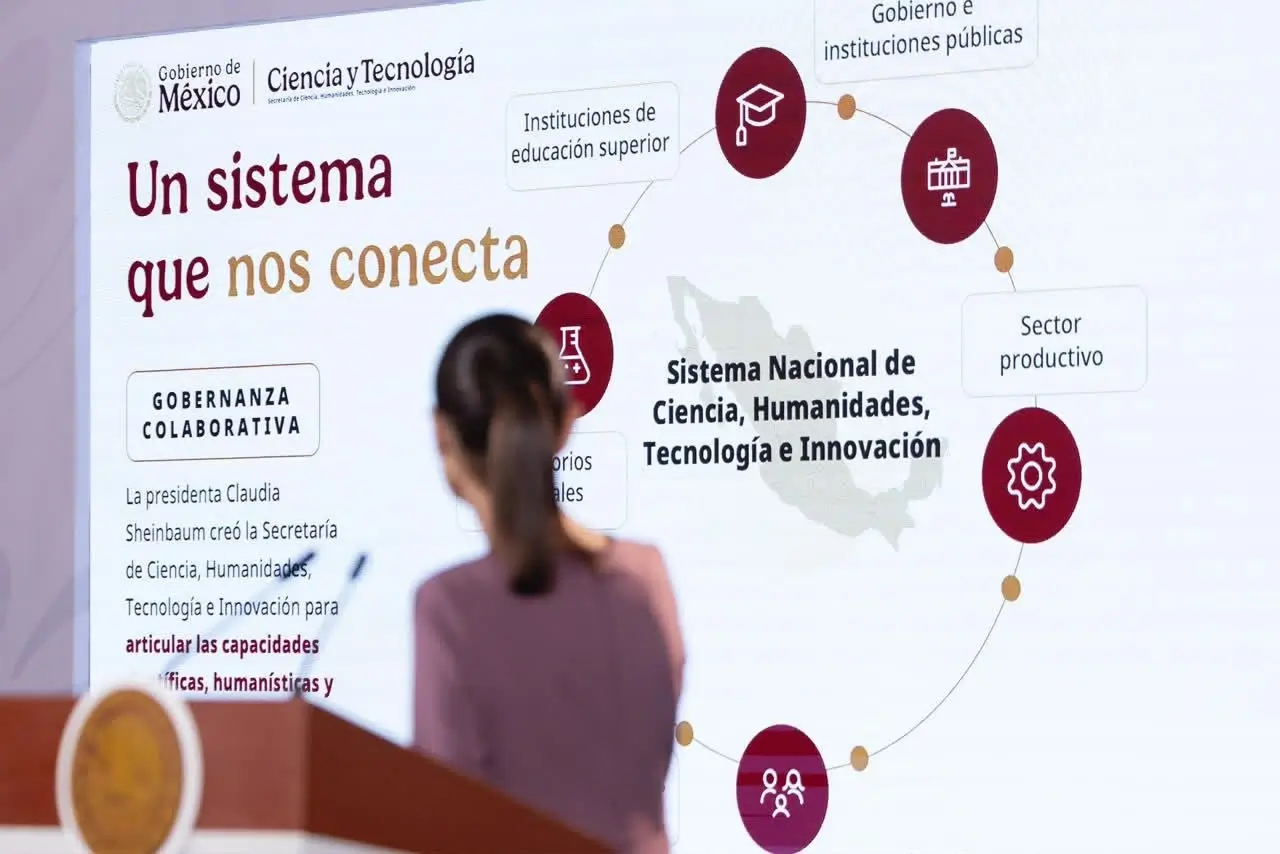
Over the past several years the government has gone through great efforts to revitalize the healthcare system, new hospitals have been built, outdated equipment has been replaced by the most modern and high-tech equipment, service has improved, more medical personnel has been hired and great effort has been done to reach the most remote and isolated areas of the country. The culmination of all this work is the Universal Healthcare Service (Servicio Universal de Salud or SUS) that was announces by President Sheinbaum on April 7 and officially created on April 17, 2026 when the Presidential Decree was published in the Diario Oficial de la Federación, the governments official publication. The original announcement only mentioned the three aforementioned systems, but the decree added other medical institutions run by the Federal Government through the Ministry of Health, the hospitals and clinics run by Pemex, the state-owned oil company and state run healthcare systems that decide to be incorporated and are not part of the IMSS-Bienestar.
What does this entail, simply put it allows to unify a fragmented public healthcare system and make it work as one, without changing how each healthcare institution works. It is because of this that the SUS will work under a system of inter-institutional budgetary compensation, that is every person will still be under a specific healthcare system as mentioned above while the service is now interchangeable and anyone can go to any hospital or clinic, the system a person belongs to will have to pay the system that provided the service to fill the gaps in the budget that were incurred by the expenses of the services that were provided.
To enter the SUS people are required to register and have an affiliation card also referred to as a “Health Card” that will have the basic information of the person, linked to the CURP an alphanumeric code that is unique to every Mexican citizen, an associated electronic medical history and the system they belong to, theses last two encoded in two QR codes. There will also be a virtual version of the card found in the associated app, that will also include among other things access to electronic prescriptions, medical history and allow to set-up medical appointments among other things.
At the time of this writing the registration process is just beginning and will continue until the end of the year which is when the new model will also start to operate with a limited amount of medical services. On August 25 it was announced that starting next January 12,750 new clinics for medical consultation and primary healthcare will start to open.
As we can see the SUS is in no way creating a new healthcare system from scratch as it has been mentioned on social media, but unifying the existing systems and their infrastructure, both current and new, to give everyone access to quality healthcare.
Image: Gemini AI
C.R. Infante