Mexico
Mexico Unveils "Olinia Carga": The New Electric Workhorse for Small Businesses
Published:
Mexico
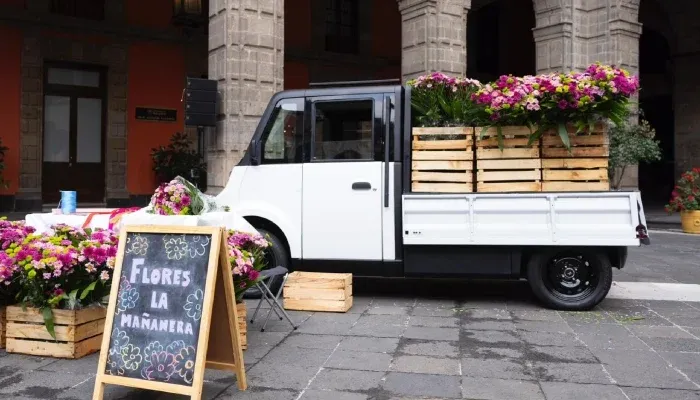
Following the June 7 unveiling of the Olinia 1—Mexico’s first 100% electric compact vehicle, backed by the government and central to President Claudia Sheinbaum’s flagship electromobility initiative—a second model, the "Olinia Carga" (Cargo), was revealed during the morning press conference in the National Palace’s central courtyard.
Roberto Capuano, the Olinia project director, explained that the Olinia Carga is designed to transport products, tools, merchandise, and equipment efficiently. It helps corporate employees and micro-entrepreneurs carry out their work activities in a practical way.
"In large companies, logistics rely on fleets of trucks, vans, tricycles, and motorcycles. Small businesses, however, often use private cars—which weren't designed for commercial work—or motorcycles, which limit cargo volume," Capuano noted.
To ensure the design to be practical and functional, Capuano explained that fieldwork was conducted. The team observed that many vehicles are retrofitted to transport goods, forcing users to adapt to the vehicle rather than the other way around.
This vehicle has a cargo capacity of up to 650 kilograms and a range exceeding 120 kilometers. The design maximizes storage space, accommodating 12 crates on a platform that can be stacked in multiple tiers.
The Olinia project director highlighted the vehicle's low-profile storage area. Because it is electric, the space beneath the platform remains open, allowing for the storage of equipment and other items. Additionally, the open platform supports various configurations—ranging from enclosed structures to stake-side beds or specialized setups for tasks like transporting glass or large water jugs. He also noted that the Olinia Carga, like the Olinia 1, can be charged using any standard outlet, and its operating costs are one-fourth those of a light cargo vehicle.
Roberto Capuano noted that Olinia has demonstrated Mexico's ability to design and develop technological products tailored to the needs of the Mexican people. The next step, therefore, is "to transform this into a company capable of manufacturing, distributing, and selling the vehicle nationwide."
In this regard, a collaboration was announced with Nacional Financiera—the Mexican state's development bank—to launch a public call for proposals to select strategic partners.
"We aren't primarily looking for money—though, obviously, funding will be part of this round—but rather for industrial and commercial capacity. The call for proposals defines who we partner with and under what terms," Capuano stated.
The Olinia project director also assured that the selection process would be open, transparent, and competitive, governed by public rules and overseen by Mexican state institutions. Both domestic and foreign companies may participate on equal footing, provided they add value to the Olinia business plan.
The terms of the call for proposals will be released in late September, with the process concluding in December, he added.
Image: Gobierno de México
Voice of Mexico